
Is Enclomiphene a Steroid? Benefits, Uses, Side Effects, and How It Works
- 7 Views
- johnsangreat
- November 20, 2026
- Reviews
Introduction: Is Enclomiphene a Steroid?
Is enclomiphene a steroid? This is a common question among people interested in testosterone levels, men’s health, muscle development, and fertility. Although enclomiphene can help increase the body’s natural testosterone production in certain men, it is not an anabolic steroid. Instead, it belongs to a class of medications known as selective estrogen receptor modulators (SERMs).
Enclomiphene has gained attention because of its potential role in managing certain cases of low testosterone, particularly when preserving fertility is important. Unlike testosterone replacement therapy, which supplies testosterone from an external source, enclomiphene works by influencing the body’s hormonal signaling system. Understanding the difference between enclomiphene and anabolic steroids is important for anyone researching hormone health.
What Is Enclomiphene?
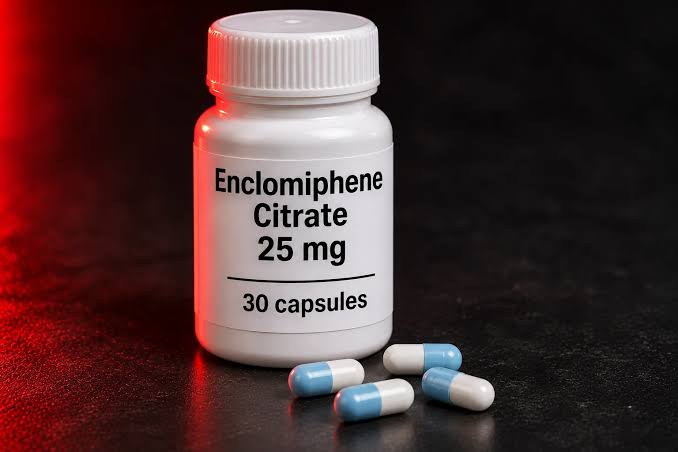
Enclomiphene is a nonsteroidal compound and one of the two isomers found in clomiphene citrate. It acts as a selective estrogen receptor modulator, meaning it interacts with estrogen receptors in specific tissues and changes how estrogen’s signals affect the body. In men, enclomiphene has been studied as a potential treatment for secondary hypogonadism, a condition in which the body does not produce sufficient testosterone because of problems with hormonal signaling from the brain to the testes.
The medication works by reducing estrogen’s negative feedback on the hypothalamus and pituitary gland. This can encourage the release of hormones that stimulate the testes to produce testosterone. Enclomiphene is not the same as testosterone, and it does not belong to the anabolic steroid family. Its effects depend on the body’s ability to respond to hormonal signals, which means it may not be effective for every cause of low testosterone.
How Does Enclomiphene Work?
To understand why enclomiphene is different from steroids, it helps to look at the body’s natural hormone production system. The brain and reproductive organs communicate through a hormonal pathway that regulates testosterone and sperm production. Enclomiphene influences this pathway rather than supplying an external source of testosterone.
1. It Influences Estrogen Receptors
Enclomiphene acts on estrogen receptors involved in the hormonal feedback loop between the brain and the reproductive system. By blocking certain estrogen signals, it can reduce the feedback that normally limits the release of reproductive hormones. This allows the body to increase its hormonal signaling under appropriate conditions.
2. It Can Increase LH and FSH
The hypothalamus and pituitary gland help regulate testosterone production through a series of hormonal signals. Enclomiphene can increase the release of luteinizing hormone (LH) and follicle-stimulating hormone (FSH). LH stimulates testosterone production in the testes, while FSH plays an important role in sperm production. The response varies according to a person’s underlying health and hormonal condition.
3. It Supports Natural Testosterone Production
Because enclomiphene encourages the body to produce its own testosterone, it differs from treatments that directly supply testosterone. Clinical studies suggest that it can increase testosterone levels in some men with secondary hypogonadism. However, an increase in testosterone on a blood test does not necessarily mean every symptom will improve. Long-term benefits and safety also require further research.
Enclomiphene vs. Anabolic Steroids: What Is the Difference?
Although enclomiphene and anabolic steroids are sometimes discussed in bodybuilding and hormone optimization communities, they work differently. Enclomiphene influences hormonal signaling, while anabolic steroids directly activate androgen receptors to produce effects associated with testosterone. Understanding these differences can help readers avoid confusing two distinct types of compounds.
Enclomiphene
- Drug class: Selective estrogen receptor modulator (SERM).
- Primary action: Influences hormonal signaling to stimulate the body’s own testosterone production.
- Potential medical use: Investigated for certain cases of male hypogonadism.
- Fertility considerations: May help preserve sperm production in some men compared with external testosterone treatment.
Anabolic Steroids
- Drug class: Androgenic and anabolic steroid hormones or synthetic derivatives.
- Primary action: Directly activate androgen receptors to produce effects associated with testosterone.
- Common uses: Certain medical conditions; nonmedical use may involve muscle growth and athletic performance.
- Fertility considerations: External anabolic steroids can suppress the body’s natural hormone production and reduce sperm production.
The main distinction is that enclomiphene influences the body’s hormonal signaling, whereas anabolic steroids directly activate androgen receptors. Neither approach should be considered risk-free, and the appropriate treatment depends on a person’s medical needs.
Potential Benefits of Enclomiphene
Supporting Testosterone Levels
One potential benefit of enclomiphene is its ability to increase testosterone levels in selected men with secondary hypogonadism. This may be useful when laboratory testing confirms low testosterone and the underlying hormonal system can respond to stimulation. Treatment decisions should consider symptoms, test results, and the underlying cause of the hormone imbalance.
Preserving Fertility
Fertility is an important consideration for men seeking treatment for low testosterone. External testosterone therapy can suppress LH and FSH, potentially reducing sperm production. Enclomiphene has been studied as an alternative that may raise testosterone while maintaining sperm production. However, fertility outcomes vary, and enclomiphene should not be assumed to improve fertility in every patient.
Oral Administration
Enclomiphene has been studied as an oral medication, which may appeal to patients who prefer tablets over testosterone injections or topical preparations. Its convenient administration does not remove the need for medical supervision. A healthcare professional can determine whether this type of treatment is appropriate based on individual health needs.
What Are the Possible Side Effects of Enclomiphene?
Enclomiphene may cause side effects, and available evidence does not establish its long-term safety for every intended use. Its effects can vary between individuals, depending on hormone levels, medical history, and other medications. Anyone considering treatment should understand the possible risks before making a decision.
Potential adverse effects reported or considered in clinical research include:
- Headaches and dizziness.
- Nausea or hot flashes.
- Changes in estradiol levels.
- Possible mood or visual symptoms.
- Potential cardiovascular or blood-clotting complications that require careful assessment.
Anyone experiencing sudden vision changes, chest pain, difficulty breathing, or one-sided leg swelling should seek urgent medical attention. People with existing medical conditions or a history of blood clots should discuss the risks with a qualified healthcare professional before considering hormone-related treatment.
Is Enclomiphene FDA Approved?
Enclomiphene itself is not approved by the United States Food and Drug Administration (FDA) for any use. Although it has been investigated in clinical trials, concerns about evidence of clinical benefit and safety have limited its regulatory approval. This is an important consideration for people researching enclomiphene as a potential treatment for low testosterone.
Its availability and legal status can vary by country. Some pharmacies may offer compounded formulations under specific prescribing rules, but compounded products are not the same as FDA-approved medications. Anyone considering enclomiphene should speak with a licensed healthcare professional rather than purchasing unverified products online.
Products marketed as research chemicals or testosterone boosters may have uncertain quality, purity, and safety. Checking local regulations and seeking qualified medical advice can help reduce the risks associated with unverified hormone-related products.
Is Enclomiphene Good for Muscle Growth?
Because enclomiphene may increase testosterone in certain men, some people wonder whether it can improve muscle growth, strength, or workout recovery. Testosterone plays an important role in muscle development, but increasing testosterone through medication does not guarantee greater muscle gains. Results depend on the person’s baseline hormone levels, training program, nutrition, sleep, and overall health.
Enclomiphene is not an anabolic steroid and should not be treated as a proven bodybuilding supplement. It is not a substitute for progressive resistance training, adequate protein intake, or appropriate recovery. People who have normal testosterone levels should not assume that using enclomiphene will improve athletic performance or produce additional muscle growth.
Who Should Consider Enclomiphene?
Enclomiphene may be discussed with a specialist when a man has confirmed low testosterone associated with secondary hypogonadism, particularly when future fertility is a concern. A healthcare professional can assess whether the treatment is appropriate and explain the potential benefits, limitations, and risks.
Before treatment, a healthcare professional may assess symptoms, repeat morning testosterone measurements, and order additional tests such as LH, FSH, and other investigations to identify the cause of the hormone imbalance. This assessment helps distinguish between different forms of testosterone deficiency and guides the selection of appropriate treatment.
Conclusion: Is Enclomiphene a Steroid?
No, enclomiphene is not a steroid. It is a nonsteroidal selective estrogen receptor modulator that can stimulate the body’s natural testosterone production in certain men by influencing hormonal signals involving LH and FSH. Unlike anabolic steroids, enclomiphene does not directly act as an androgen.
It has been studied as a potential option for selected men with secondary hypogonadism, especially those who want to preserve fertility. However, its effectiveness, regulatory status, and long-term safety must be considered carefully. It is not a proven shortcut for muscle growth and should not be used without appropriate medical guidance.
Anyone researching enclomiphene for testosterone support, fertility, or muscle development should consult a qualified healthcare professional before use. Understanding the difference between hormone-modulating medications and anabolic steroids can help people make better-informed decisions about their health.