
213 Area Code Text Message: What It Means and How to Stay Safe
- 26 Views
- johansan great
- September 29, 2026
- Reviews
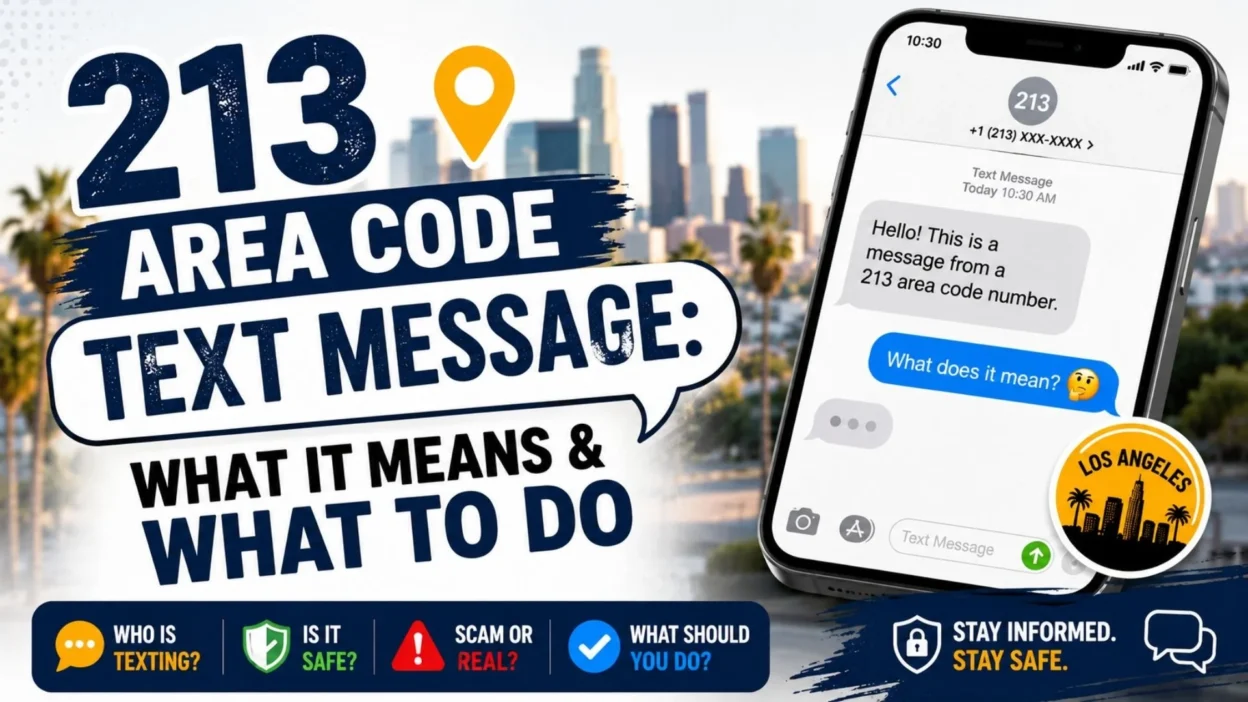
Receiving a 213 area code text message from an unfamiliar number can leave you wondering who sent it, where the number comes from, and whether the message is legitimate. Area code 213 is associated with Los Angeles, California, and has a long history dating back to 1947. Today, it operates as part of an overlay system with area codes 323 and 738 in the Los Angeles region.
However, an unfamiliar text from a 213 number does not automatically mean the sender is located in Los Angeles or that the message is trustworthy. Phone numbers can be transferred between carriers, used through internet-based services, and spoofed by scammers. If you have recently received a 213 area code text message, understanding what the area code means and knowing how to identify suspicious messages can help you decide how to respond.
What Is the 213 Area Code?
The 213 area code is a California telephone area code primarily associated with Los Angeles and surrounding communities. It was one of California’s original area codes, created in 1947. Over the decades, portions of its original territory were separated into other area codes as telephone-number demand increased.
In 2017, the boundary between the 213 and 323 numbering areas was eliminated, creating a combined overlay region. The California Public Utilities Commission later approved area code 738 as an additional overlay for the same region.
As a result, a 213 number can be associated with the broader Los Angeles numbering region rather than one particular neighborhood.
What Does a 213 Area Code Text Message Mean?
A 213 area code text message simply means the phone number displayed to you begins with the 213 area code. It does not, by itself, tell you why the person is contacting you or whether the message is genuine.
For example, a 213 text could come from:
- A friend or family member
- A Los Angeles business
- A customer-service department
- A delivery or appointment service
- A marketing company
- An automated notification system
- An unknown or unwanted sender
- A scammer using a spoofed number
The area code provides geographic information about the numbering assignment, but it should not be treated as proof of the sender’s current location or identity.
Why Did I Receive a Text From a 213 Number?
There are many ordinary reasons you could receive a text from a 213 number. You might have previously interacted with a Los Angeles business, subscribed to a service, entered your number into an online form, or simply received a message from someone who has a 213 number.
There is also the possibility that the message was sent accidentally. For example, someone may have entered the wrong telephone number when trying to contact another person.
Another possibility is that the sender is using a virtual phone service. Modern communication platforms allow individuals and businesses to use numbers that do not necessarily correspond to their current physical location.
Therefore, receiving a 213 area code text message is not enough information to determine whether the sender is legitimate.
Is a 213 Area Code Text Message a Scam?
Not necessarily. A 213 number is a legitimate Los Angeles area code, but legitimate area codes can also appear in scam messages.
The Federal Trade Commission warns that scammers can manipulate caller ID information, a practice known as spoofing. This can make a communication appear to come from a familiar or local number even when it does not.
Text-message scams can involve fake delivery notices, fraudulent bank alerts, bogus employment opportunities, fake prizes, and other attempts to persuade recipients to click links or provide sensitive information. The FTC reported that consumers lost $470 million to scams that started with text messages in 2024.
The important point is that the 213 area code itself is not evidence of a scam. Instead, pay attention to the content and behavior associated with the message.
Common Warning Signs of a Suspicious Text
A suspicious 213 area code text message may contain several warning signs. Be particularly cautious when a message:
- Creates a sense of urgency or threatens immediate consequences
- Requests passwords or financial information
- Asks for a Social Security number or other sensitive information
- Contains an unexpected link
- Claims there is a problem with your bank account
- Offers an unexpected prize, refund, or financial opportunity
- Says you must pay immediately
- Comes from an organization you were not expecting to hear from
- Uses unusual language, spelling, or formatting
The FTC specifically advises consumers to be careful with unexpected text messages that attempt to obtain personal information or direct recipients to suspicious websites.
Should You Reply to a 213 Area Code Text?
If you do not recognize the sender, it is generally safer not to respond immediately. Replying can potentially confirm that your phone number is active, while engaging with a suspicious sender can create additional opportunities for manipulation.
Instead, consider whether you were actually expecting a message. If the text claims to be from your bank, delivery company, employer, or another organization, contact that organization through an official website or phone number that you already know is legitimate.
Do not rely solely on the contact information provided in the suspicious text.
What Should You Do With an Unexpected 213 Text?
If you receive an unexpected 213 area code text message, take a moment before clicking anything or providing information.
First, read the message carefully. Determine whether you recognize the sender and whether the situation described makes sense. If the message includes a link, avoid opening it until you have independently verified the sender.
If it appears to be spam, you can delete and block the message. Your mobile carrier and phone may also provide tools for reporting unwanted texts.
If the message appears to be a scam, the FTC provides guidance for reporting unwanted calls and text messages.
Can a 213 Number Be Spoofed?
Yes. Phone numbers and caller ID information can be spoofed. The FTC explains that scammers can make virtually any name or number appear on caller ID, meaning that a local-looking number does not necessarily indicate where the communication originated.
This is particularly relevant when evaluating a 213 area code text message. Seeing a Los Angeles area code should not automatically make the message seem trustworthy.
Instead, evaluate the actual request. A legitimate business should generally be able to verify your interaction through an official channel without requiring you to trust an unexpected text message.
Final Thoughts on a 213 Area Code Text Message
A 213 area code text message can have many explanations. Area code 213 is a legitimate and historically significant Los Angeles telephone code, and it currently operates within the 213/323/738 overlay region.
At the same time, the area code alone cannot establish who sent a message or whether it is legitimate. If an unfamiliar 213 number sends you an unexpected message, avoid clicking suspicious links, do not provide sensitive information, and independently verify important claims through an official source. Taking a few seconds to verify an unexpected message can help protect your personal and financial information.